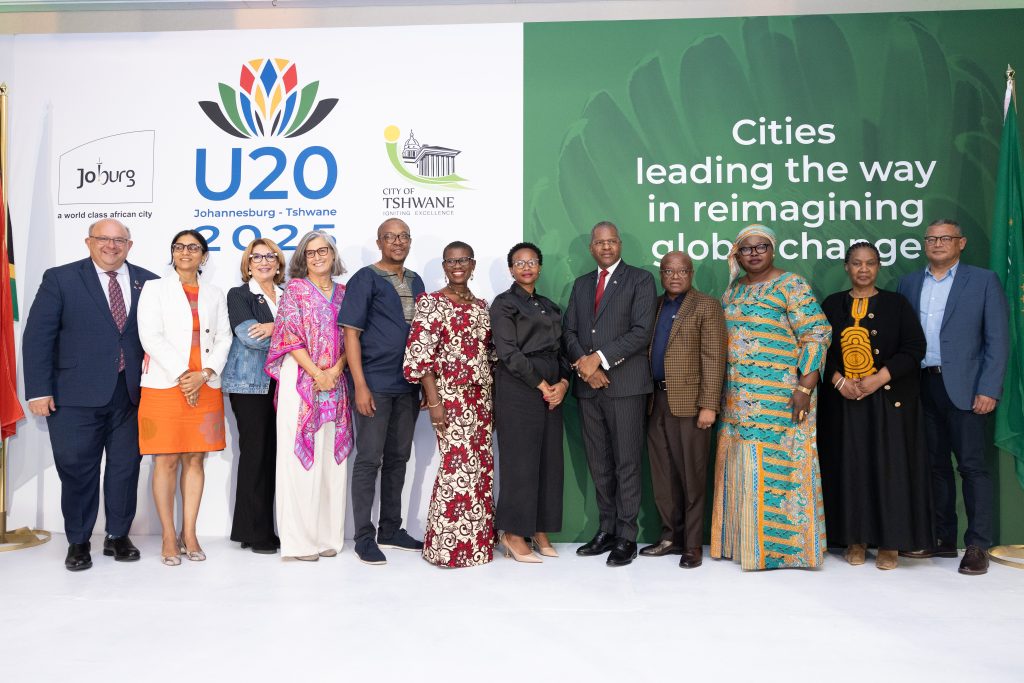
What is the collective noun for urbanists? Whatever it is, it was on full display when South Africa convened a select group of 320 ‘cities people’ at the “Mayor’s Summit of the Urban20” in Johannesburg 12-14 September 2025 as part of the country’s G20 Presidency.
The event opened with ballet by the incredible Mzansi Dance Company. Intentionally or not, the performance provided the perfect metaphor for what was to come. It was ballet alright, with full regard for the control, skill, discipline and curation that makes any dance ballet. At the same time, it unambiguously broke the strictures of Europe’s classical ballet schools. Fused with the South African pantsula dance style, it was more agile and full of promise, as if the dancers were daring the gathered delegates: “Are you open to a future that draws on a broader cultural canon, breaks structural constraints and offers the hope of something richer, more imaginative and exciting …and what are you prepared to let go of to attain it?”
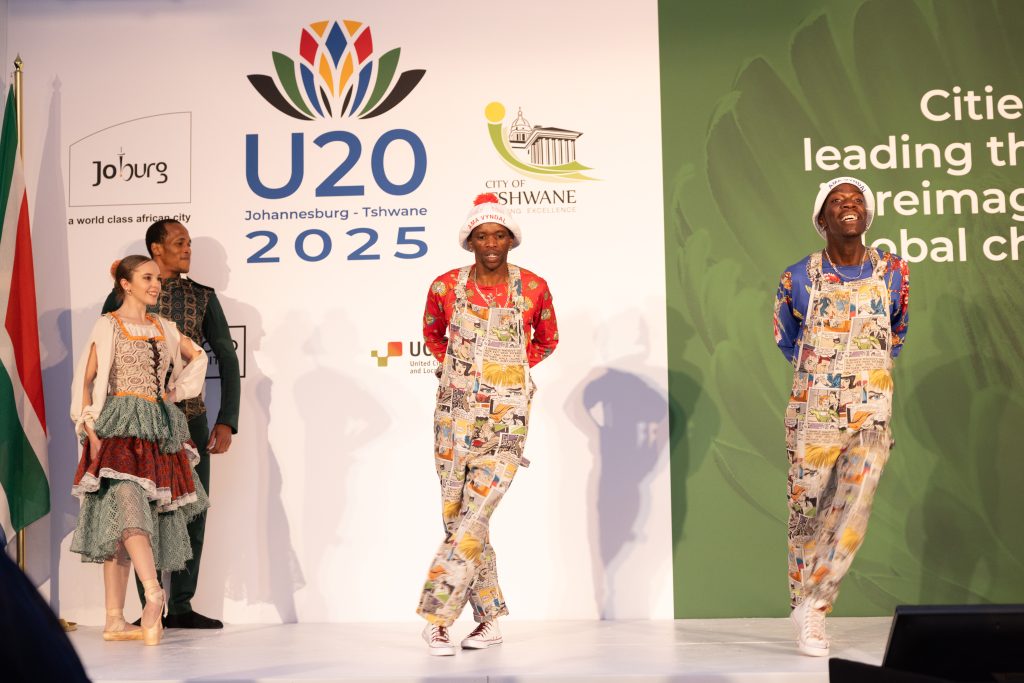
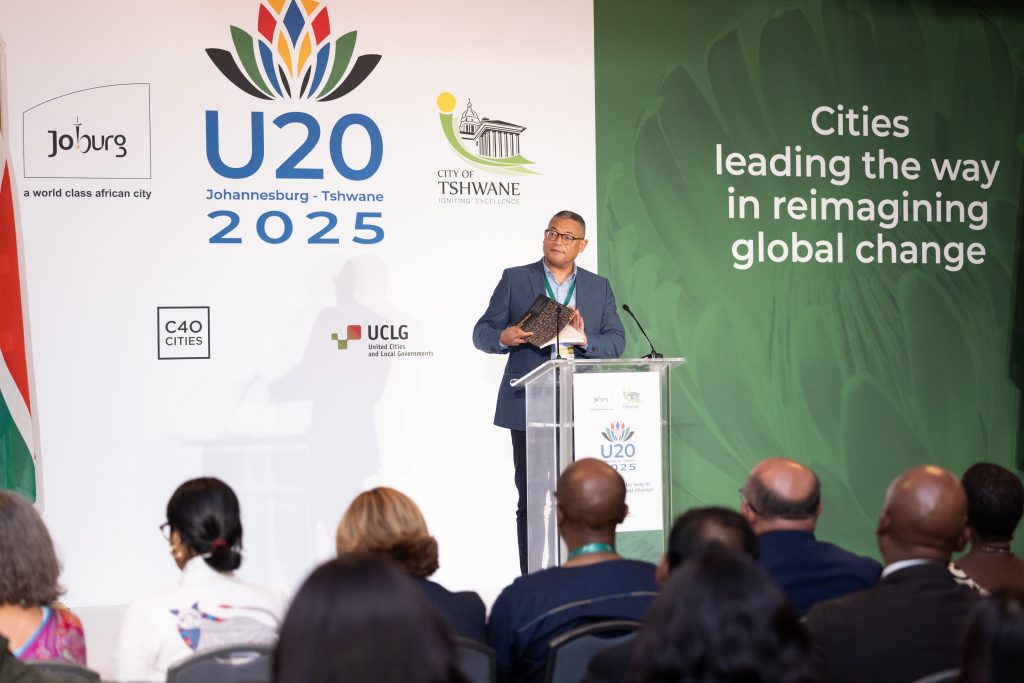
Given that the Urban20 convened under the tagline “Cities leading the way in reimagining global change” the dance’s provocation was entirely appropriate. Not only is it difficult to think of a major global challenge that can be addressed without regard for urbanisation and the influence of cities, but if we play-forward the fracturing of nation state multilateralism, the hollowing-out of federal research budgets, and the implications of prioritizing digitally amplified corporate profits over the social and ecological fabrics that sustain us, then the need to reimagine something different has never been more acute. The fact that these urban leaders were gathering on African soil, where the median age is just 19 years, and the urban population will triple in size in the three decades prior to 2050, foregrounded both the inevitability and the promise of change. The dancers reminded us that realising the benefits of urbanisation will require all the skill, discipline, and planning we can muster, but it will also require a letting go and will look and feel disruptive.
The opening dance complete, delegates set about the work of inserting the importance of cities, and particularly the rapidly evolving cities of Africa, into the multilateral architecture that defines G20 gatherings. The first presentations came from the two co-hosts, Johannesburg Mayor Dada Morero and Mayor of Tshwane Dr Nasiphi Moya who highlighted the opportunity to, “Bring the collective wisdom of cities onto the global agenda to ensure our people live with dignity, travel safely, grow the economy”.
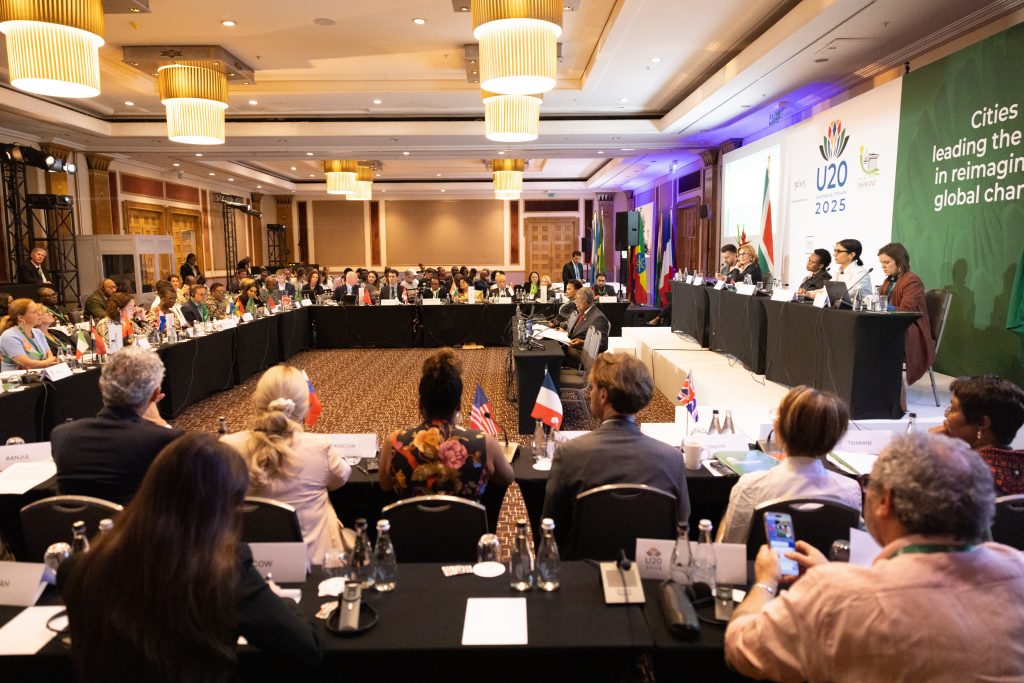
There were more presentations and panel discussions over three days than a single person could attend. City leaders shared their successes and failures with energy governance, social housing, localisation, greening urban value chains, land management and data gathering. Cutting across most sessions was the call for greater investment in urban spaces and how this might be secured in the current economic environment. For many cities the underlying need requires tackling the fiscal and political constraints, some of them codified in national laws, that prevent their cities contributing the full extent of their ideas, innovation, carbon sinks and economic productivity to national development. This must be complemented by multilateral and national development banks developing the capacity and the metrics that would allow them to lend to local authorities. When development banks get involved, Mohan Visekananden (DBSA and AfDB) reminded delegates, governance becomes more accountable and patronage in urban networks gets pegged-back.
Throughout the three days Johannesburg, with all its grittiness and still reeling in the wake of a political maelstrom, was in full view. There were sight-seeing trips to Jeppestown to take in both urban decay and efforts at precinct renewal, a trip to Soweto Theatre and a visit to Constitutional Hill where South Africans were reminded by foreign colleagues that our apex court is still the subject of envy for almost every country pursuing democracy. The need for tight security when leaving the conference venue told a story in itself, and despite considerable efforts to make the dedicated time productive, electricity outages paused proceedings on the second day. But city leaders are pragmatists, exercised not fazed by urban problems. This was a ‘family gathering’ of leaders, united by the everyday challenges being experienced in cities around the world; the contexts may differ but issues of work, shelter, mobility, services, safety and identity are germane to all cities, as are the disruptive influences of climate change and the digital transformation.
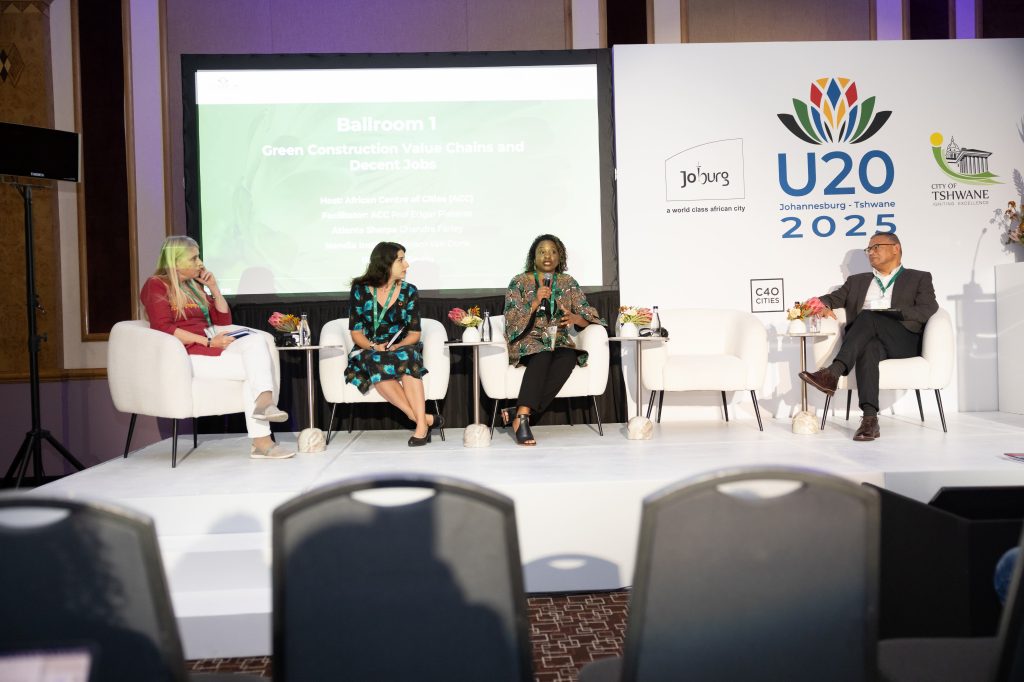
This commonality was in evidence as the U20 Communiqué was finalised under the themes of Economic Opportunity and Financing, Climate Action and Urban Resilience, Social Inclusion and Equity, Digital Transformation and Innovation. The room was full of potential geo-political conflict, but you would not have guessed as city leaders rolled up their sleeves for the sake of a “shared vision” united by their responsibility for real people in their respective jurisdictions. The communiqué is non-binding and therefore easy, the cynics might say, but the mood was earnest, urgent and committed. The point was repeatedly made that national leaders are required to visit sites of disaster, while mayors are required to respond to these disasters. Proximity to their constituency creates realism and limits the currency of performative politics and posturing without action. SALGA President Bheki Stofile referred to local governments as, “The legs of national government….if local authorities are under-resourced, a nation limps”. Others pointed out that if there is to be a just climate transition, it will have to find resonance in cities and highlighted existing efforts to align housing, industrial, energy climate and spatial policies through budget allocations and the lending by national development banks.
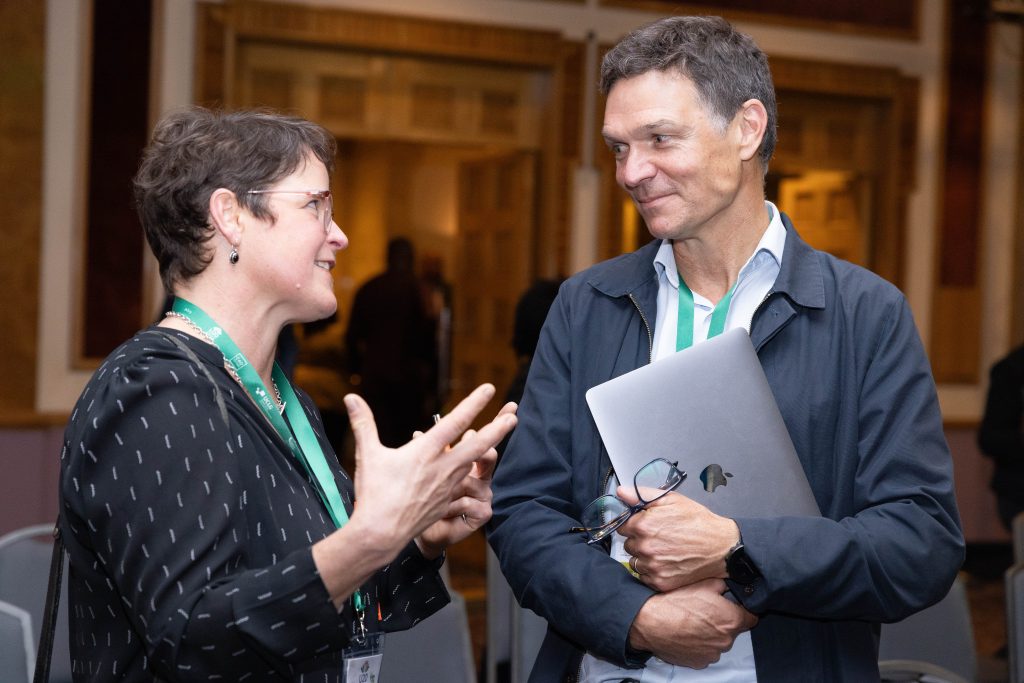
UN-Habitat is central to the Urban20 family and their Executive Director, Anacláudia Rossbach, reminded delegates of the “Pact for the Future,” a UN document adopted in September 2024, that emphasizes strengthening partnerships and whole-of-society engagement to achieve global goals, with an emphasis on housing for the 1.6 billion people globally that do not have access to adequate shelter (the city of Paris claimed to be targeting 40% social housing!). The strengthening of partnerships was another cross-cutting theme, with a shared commitment to ensure that events such as the World Urban Forum, in Baku 2026, gained more profile and mobilized more investment in cities.
Edgar Pieterse from the African Centre for Cities chaired the closing session, evoking an ‘imaginary from 2063’ in which young urban people, who had never known the normalcy of formal, state-centric service delivery, had birthed a new order. This imaginary resonated with a piece by Namatal Kwekweza in the Urban2063 “Unstoppable Force” publication that was given to each delegate. It provided context to the idea that framed the closing day: building the world we want has to be a bottom-up process and requires empowering the cities we have and will have. Of course, if any of this was easy it would be done. But as someone who works more on the technocratic side of urban development, my impression was that Urban20 strengthened an important community and built a platform on which cities can fill some of the gaps in the global governance architecture and offer something new in addressing global challenges.
What is the collective noun for urbanists? A ‘campaign’ or a ‘coalition’, I suggest, and specifically for us living in evolving African cities, the Urban2063 campaign and the coalition of people committed to addressing urban challenges.